Khan Academy: 2757 products
Khan Academy is an organization on a mission. We're a not-for-profit with the goal of changing education for the better by providing a free world-class education for anyone anywhere.
All of the site's resources are available to anyone. It doesn't matter if you are a student, teacher, home-schooler, principal, adult returning to the classroom after 20 years, or a friendly alien just trying to get …
check_box_outline_blank
Class 12 Physics (India): Transistor as a voltage amplifier

We will explore what it means to amplify a signal mathematically, and then see how our transistor does voltage amplification. We will also …
VideoFree12
check_box_outline_blank
Class 11 Physics (India): Worked example: Derivative of ln(√x) using the chain rule

f(x)=ln(√x) is a composition of the functions ln(x) and √x, and therefore we can differentiate it using the chain rule. Class 11 Physics (I…
VideoFree7
check_box_outline_blank
Class 11 Physics (India) - Hindi: Doppler effect formula for observed frequency (Hindi)
Let's derive the formula for how the perceived frequency of a sound changes when its source is moving toward you. Class 11 Physics (India) …
VideoFree9
check_box_outline_blank
Health and medicine: How to identify murmurs
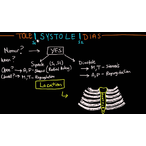
Health and medicine The medical world can be a confusing place. Patients, their families, and even students entering health fields might fe…
VideoFree9 minutes
check_box_outline_blank
Class 11 Physics (India): Absolute temperature and the kelvin scale
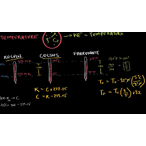
Class 11 Physics (India) Let's learn, practice, and master topics of class 11 physics (NCERT) starting with kinematics and then moving to d…
VideoFree10
check_box_outline_blank
Class 11 Physics (India) - Hindi: Properties of periodic waves (Hindi)
Amplitude, period, frequency and wavelength of periodic waves. How to calculate wave velocity. Class 11 Physics (India) - Hindi To help stu…
VideoFree16
check_box_outline_blank
Class 11 Physics (India): Angular momentum

Introducing angular momentum conceptually starting from linear momentum. Also covers some real-life examples. Class 11 Physics (India) Let'…
VideoFree11 minutes
check_box_outline_blank
Class 12 Physics (India): Magnifying power of telescope
Let's figure out the magnifying power (magnification) of our telescope. Class 12 Physics (India) It is now time to dive deeper into the wor…
VideoFree7
check_box_outline_blank
Physics: Discovery of triboelectric effect

Our ancestors noticed that when amber was rubbed against fur it attracted small objects...why is this? Physics Learn about the basic princi…
VideoFree1 minute
check_box_outline_blank
Class 11 Physics (India) - Hindi: Bernoulli's equation (Hindi)
In this video Ram derives Bernoulli's equation. Class 11 Physics (India) - Hindi To help students who prefer to learn by watching Hindi vid…
VideoFree19
check_box_outline_blank
Class 12 Physics (India): Minimum deviation in prism
What causes the famous 22-degree halo around the sun? In this video let's explore the concept of minimum deviation in a prism and how that …
VideoFree10
check_box_outline_blank
Physics: Solving for time
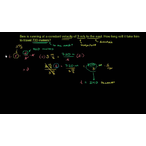
Rate of change in position, or speed, is equal to distance traveled divided by time. To solve for time, divide the distance traveled by the…
VideoFree10 minutes
check_box_outline_blank
Class 11 Physics (India): Components of vectors

Sal finds the x and y-components of a vector given its graph. Class 11 Physics (India) Let's learn, practice, and master topics of class 11…
VideoFree3
check_box_outline_blank
Class 11 Physics (India) - Hindi: Constructive and Destructive interference (Hindi)
In this video Ram explains how Noise canceling headphones work using constructive and destructive interference. Class 11 Physics (India) - …
VideoFree8
check_box_outline_blank
Class 11 Physics (India): Acceleration vs. time graphs
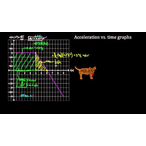
David explains how to read an acceleration vs. time graph. He then shows how the area under the curve gives the change in velocity and does…
VideoFree15 minutes