Physics: Solving for time


Description
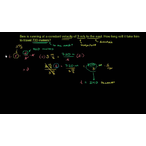
Rate of change in position, or speed, is equal to distance traveled divided by time. To solve for time, divide the distance traveled by the rate. For example, if Cole drives his car 45 km per hour and travels a total of 225 km, then he traveled for 225/45 = 5 hours.
Physics
Learn about the basic principles that govern the physical world around us. Solid understanding of algebra and a basic understanding of trigonometry necessary.
Displacement, velocity and time
This tutorial is the backbone of your understanding of kinematics (i.e., the motion of objects). You might already know that distance = rate x time. This tutorial essentially reviews that idea with a vector lens (we introduce you to v…
Frequently asked questions
There are no frequently asked questions yet. If you have any more questions or need help, contact our customer service.
Rate of change in position, or speed, is equal to distance traveled divided by time. To solve for time, divide the distance traveled by the rate. For example, if Cole drives his car 45 km per hour and travels a total of 225 km, then he traveled for 225/45 = 5 hours.
Physics
Learn about the basic principles that govern the physical world around us. Solid understanding of algebra and a basic understanding of trigonometry necessary.
Displacement, velocity and time
This tutorial is the backbone of your understanding of kinematics (i.e., the motion of objects). You might already know that distance = rate x time. This tutorial essentially reviews that idea with a vector lens (we introduce you to vectors here as well). So strap your belts (actually this might not be necessary since we don't plan on decelerating in this tutorial) and prepare for a gentle ride of foundational physics knowledge.
Topic: Science
Learn about all the sciences, from physics, chemistry and biology, to cosmology and astronomy, across hundreds of videos, articles and practice questions.
Share your review
Do you have experience with this video? Submit your review and help other people make the right choice. As a thank you for your effort we will donate $1.- to Stichting Edukans.There are no frequently asked questions yet. If you have any more questions or need help, contact our customer service.