Khan Academy: 2757 products
Khan Academy is an organization on a mission. We're a not-for-profit with the goal of changing education for the better by providing a free world-class education for anyone anywhere.
All of the site's resources are available to anyone. It doesn't matter if you are a student, teacher, home-schooler, principal, adult returning to the classroom after 20 years, or a friendly alien just trying to get …
check_box_outline_blank
Class 11 Physics (India): What is a function?


Functions assign a single output for each of their inputs. In this video, we see examples of various kinds of functions. Class 11 Physics (…
VideoFree8
check_box_outline_blank
Class 11 Physics (India) - Hindi: Ultrasound medical imaging (Hindi)
Ultrasound medical imaging (also known as sonography) is a diagnostic imaging tool that uses high-frequency sound waves to create images of…
VideoFree8
check_box_outline_blank
Class 11 Physics (India): Worked example: Derivatives of sin(x) and cos(x)

Sal differentiates g(x)=7sin(x)-3cos(x)-(π/∛x)². This can be done using the derivatives of sine and cosine, and the Power rule. Class 11 Ph…
VideoFree5
check_box_outline_blank
Class 11 Physics (India): Newton's first law of motion introduction
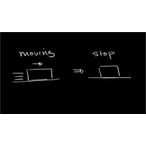
Basic primer on Newton's First Law of motion Class 11 Physics (India) Let's learn, practice, and master topics of class 11 physics (NCERT) …
VideoFree5 minutes
check_box_outline_blank
Class 11 Physics (India): Adding & subtracting vectors

Sal shows how to add vectors by adding their components, then explains the intuition behind adding vectors using a graph. Class 11 Physics …
VideoFree8
check_box_outline_blank
Class 11 Physics (India): Connecting period and frequency to angular velocity
Definition of period and frequency for an object moving in a circle. Connecting period and frequency to the magnitude of the angular veloci…
VideoFree7
check_box_outline_blank
Class 11 Physics (India) - Hindi: Deriving the shortcut to solve elastic collision problems (Hindi)
In this video, Ram derives the expression that we can use as a shortcut to solve for finding the velocities in an elastic collision problem…
VideoFree13
check_box_outline_blank
Class 12 Physics (India): Example: Analyzing a more complex resistor circuit
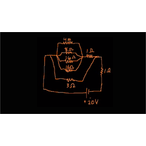
A hairy resistance problem Class 12 Physics (India) It is now time to dive deeper into the world of physics with topics from class 12 (NCER…
VideoFree7 minutes
check_box_outline_blank
Physics: Listen to variable resistance
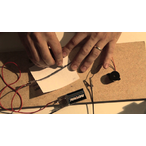
Here we draw a line on a page and use it as a variable resistor in series with a speaker. What relationship do we hear? Does it sound linea…
VideoFree1 minute
check_box_outline_blank
Class 11 Physics (India) - Hindi: Worked example: motion problems (with definite integrals) (Hindi)
What can you say about the velocity and position of a particle given its acceleration? Class 11 Physics (India) - Hindi To help students wh…
VideoFree10
check_box_outline_blank
Class 12 Physics (India): Circuit terminology
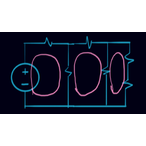
Definition of circuit terms: element, component, node, branch, mesh, and loop Class 12 Physics (India) It is now time to dive deeper into t…
VideoFree8 minutes
check_box_outline_blank
Class 11 Physics (India) - Hindi: Impact velocity from given height (Hindi)
Determining how fast something will be traveling upon impact when it is released from a given height. Class 11 Physics (India) - Hindi To h…
VideoFree6
check_box_outline_blank
Class 11 Physics (India): Treating systems (the hard way)
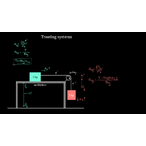
Class 11 Physics (India) Let's learn, practice, and master topics of class 11 physics (NCERT) starting with kinematics and then moving to d…
VideoFree15 minutes
check_box_outline_blank
Class 11 Physics (India): Definite integral as the limit of a Riemann sum
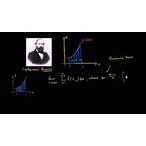
Definite integrals represent the exact area under a given curve, and Riemann sums are used to approximate those areas. However, if we take …
VideoFree4
check_box_outline_blank
Class 11 Physics (India) - Hindi: Identifying centripetal force vectors for cars and satellites (Hindi)
Identifying centripetal force vectors for cars and satellites Class 11 Physics (India) - Hindi To help students who prefer to learn by watc…
VideoFree9