Khan Academy: 2757 products
Khan Academy is an organization on a mission. We're a not-for-profit with the goal of changing education for the better by providing a free world-class education for anyone anywhere.
All of the site's resources are available to anyone. It doesn't matter if you are a student, teacher, home-schooler, principal, adult returning to the classroom after 20 years, or a friendly alien just trying to get …
check_box_outline_blank
Organic chemistry: Oxidation of aldehydes using Tollens' reagent

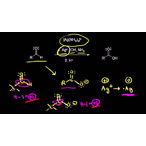
Oxidation of aldehydes to carboxylic acids using Tollens' reagent. Organic chemistry Sal and Jay cover topics covered in college organic ch…
VideoFree9 minutes
check_box_outline_blank
Organic chemistry: Reduction of carboxylic acids
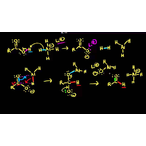
How to reduce carboxylic acids using lithium aluminum hydride (and borane). Organic chemistry Sal and Jay cover topics covered in college o…
VideoFree9 minutes
check_box_outline_blank
Chemistry: Organic hybridization practice
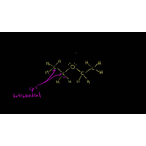
Examples of identifying hybridization and geometry for atoms in organic molecules. Chemistry Did you know that everything is made out of ch…
VideoFree10 minutes
check_box_outline_blank
Chemistry: Heterogeneous equilibrium

Ignoring the solvent or the solid state molecules when calculating the equilibrium constant. Chemistry Did you know that everything is made…
VideoFree9 minutes
check_box_outline_blank
Organic chemistry: Complex splitting
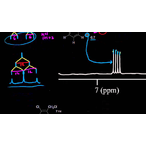
Predicting the splitting pattern when a proton has two different kinds of neighboring protons using a splitting tree. Organic chemistry Sal…
VideoFree8 minutes
check_box_outline_blank
Chemistry: 2015 AP Chemistry free response 1d

Calculating which metal will transfer more electrons in a metal-air battery. From 2015 AP Chemistry free response 1d. Chemistry Did you kno…
VideoFree11 minutes
check_box_outline_blank
Chemistry: 2015 AP Chemistry free response 3a
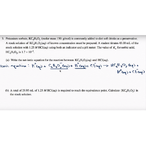
Net-ionic equation for a weak base titrated with HCl. From 2015 AP Chemistry free response 3a. Chemistry Did you know that everything is ma…
VideoFree4 minutes
check_box_outline_blank
Organic chemistry: Acid-catalyzed ester hydrolysis
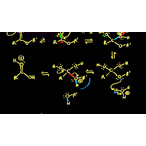
The mechanism for the acid-catalyzed hydrolysis of esters (and transesterification). Organic chemistry Sal and Jay cover topics covered in …
VideoFree11 minutes
check_box_outline_blank
Organic chemistry: Naming benzene derivatives introduction
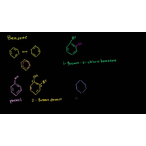
Naming benzene derivatives introduction. Organic chemistry Sal and Jay cover topics covered in college organic chemistry course. Basic unde…
VideoFree9 minutes
check_box_outline_blank
Chemistry: Introduction to solubility and solubility product constant

Introduction to solubility, molar solubility, and solubility product constant Ksp. Example of calculating the solubility of lead(II) chlori…
VideoFree12 minutes
check_box_outline_blank
Chemistry: Elementary rate laws
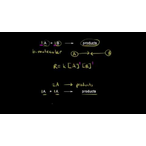
How to write rate laws for unimolecular and bimolecular elementary reactions. Chemistry Did you know that everything is made out of chemica…
VideoFree6 minutes
check_box_outline_blank
Organic chemistry: Aldehyde introduction

Aldehyde introduction. Organic chemistry Sal and Jay cover topics covered in college organic chemistry course. Basic understanding of basic…
VideoFree8 minutes
check_box_outline_blank
Organic chemistry: Regioselectivity, stereoselectivity, and stereospecificity
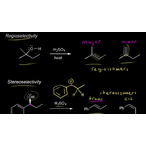
Reviewing the difference between regioselectivity, stereoselectivity, and stereospecificity in elimination reactions. Organic chemistry Sal…
VideoFree6 minutes
check_box_outline_blank
Organic chemistry: UV/Vis spectroscopy
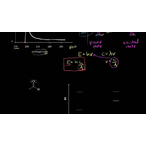
Introduction to UV/Vis spectroscopy. How this technique is used to analyze molecules with electrons in pi orbitals and nonbonding orbitals.…
VideoFree11 minutes
check_box_outline_blank
Organic chemistry: Preparation of amides using DCC

The mechanism for the formation of amides from carboxylic acids and amines using dicyclohexylcarbodiimide (DCC). Organic chemistry Sal and …
VideoFree12 minutes