Khan Academy: 2757 products
Khan Academy is an organization on a mission. We're a not-for-profit with the goal of changing education for the better by providing a free world-class education for anyone anywhere.
All of the site's resources are available to anyone. It doesn't matter if you are a student, teacher, home-schooler, principal, adult returning to the classroom after 20 years, or a friendly alien just trying to get …
check_box_outline_blank
Biology: Complex animals: Annelids & arthropods


Hank continues our exploration of animal phyla with the more complexly organized annelida and arthropoda, and a biolography on insects. Bio…
VideoFree13 minutes
check_box_outline_blank
Biology: Introduction to heredity

Heredity and Classical Genetics. Dominant and recessive traits. Heterozygous and homozygous genotypes. Biology Life is beautiful! From atom…
VideoFree17 minutes
check_box_outline_blank
Biology: Population genetics: When Darwin met Mendel

Hank talks about population genetics, which helps to explain the evolution of populations over time by combing the principles of Mendel and…
VideoFree11 minutes
check_box_outline_blank
Biology: Translation (mRNA to protein)

A deep dive into how mRNA is translated into proteins with the help of ribosomes and tRNA. Biology Life is beautiful! From atoms to cells, …
VideoFree14 minutes
check_box_outline_blank
Biology: Alleles and genes

A gene as a stretch of DNA on a chromosome. Alleles as versions (sequence variants) of a gene. Biology Life is beautiful! From atoms to cel…
VideoFree8 minutes
check_box_outline_blank
Organic chemistry: Naming two isobutyl groups systematically
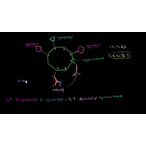
Systematic naming conventions for molecules with two isopropyl groups. Organic chemistry Sal and Jay cover topics covered in college organi…
VideoFree3 minutes
check_box_outline_blank
Chemistry: 2015 AP Chemistry free response 5
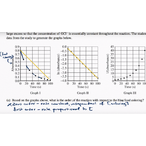
Kinetics of bleaching food coloring. From 2015 AP Chemistry free response 5. Chemistry Did you know that everything is made out of chemical…
VideoFree10 minutes
check_box_outline_blank
Chemistry: Electron configurations in the 3d orbitals

Reviews electron configuration and orbital notation for K, Ca. Works through electron configuration and orbital notation for Ca 2+ cation a…
VideoFree13 minutes
check_box_outline_blank
Chemistry: Boiling points of organic compounds
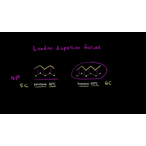
How to analyze the different boiling points of organic compounds using intermolecular forces Chemistry Did you know that everything is made…
VideoFree11 minutes
check_box_outline_blank
Chemistry: Comparing Q vs K example

A worked example using reaction quotient Q to predict how concentrations will shift so the reaction can get to equilibrium. Chemistry Did y…
VideoFree6 minutes
check_box_outline_blank
Organic chemistry: Intramolecular aldol condensation
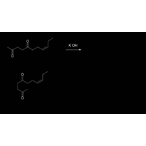
How to determine the product of an intramolecular aldol condensation. Organic chemistry Sal and Jay cover topics covered in college organic…
VideoFree12 minutes
check_box_outline_blank
Organic chemistry: Properties of ethers and crown ethers
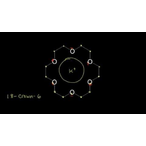
Physical properties of ethers. Crown ethers, which are large, ring-shaped molecules with multiple ether groups. Organic chemistry Sal and J…
VideoFree10 minutes
check_box_outline_blank
Organic chemistry: Identifying nucleophilic and electrophilic centers

The definition of nucleophiles and electrophiles. Identifying nucleophilic and electrophilic centers in a molecule. Organic chemistry Sal a…
VideoFree7 minutes
check_box_outline_blank
Cosmology and astronomy: Accreting mass due to gravity simulation

Cosmology and astronomy It's a great, big universe out there. In this section of Khan Academy, you'll learn about the brain-bending vastnes…
VideoFree4 minutes
check_box_outline_blank
Organic chemistry: Markovnikov's rule and carbocations
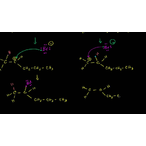
Markovnikov's Rule and Carbocations. Figuring out which addition reaction is more likely. Organic chemistry Sal and Jay cover topics covere…
VideoFree9 minutes