Khan Academy: 2757 products
Khan Academy is an organization on a mission. We're a not-for-profit with the goal of changing education for the better by providing a free world-class education for anyone anywhere.
All of the site's resources are available to anyone. It doesn't matter if you are a student, teacher, home-schooler, principal, adult returning to the classroom after 20 years, or a friendly alien just trying to get …
check_box_outline_blank
Biology: Circulatory system and the heart

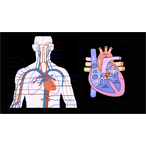
Introduction to the circulatory system and the heart. Biology Life is beautiful! From atoms to cells, from genes to proteins, from populati…
VideoFree15 minutes
check_box_outline_blank
Organic chemistry: Sn2 mechanism: kinetics and substrate
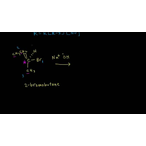
The mechanism, rate law, and stereochemistry of Sn2 reactions. How the sterics of the alkyl halide affect the reaction rate. Organic chemis…
VideoFree7 minutes
check_box_outline_blank
Chemistry: Suspensions, colloids and solutions

A suspension is a heterogenous mixture containing large particles that will settle on standing. Sand in water is an example of a suspension…
VideoFree14 minutes
check_box_outline_blank
Chemistry: 2015 AP Chemistry free response 1b and c
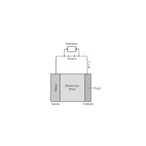
What happens to the cell potential when there is less oxygen in a zinc-air cell. From 2015 AP Chemistry free response 1b and 1c. Chemistry …
VideoFree7 minutes
check_box_outline_blank
Organic chemistry: Nucleophilic acyl substitution
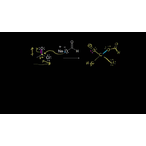
The general mechanism of nucleophilic acyl substitution (and leaving group stability). Organic chemistry Sal and Jay cover topics covered i…
VideoFree9 minutes
check_box_outline_blank
Chemistry: sp² hybridization

sp² hybrid orbitals and properties of pi bonds. Chemistry Did you know that everything is made out of chemicals? Chemistry is the study of …
VideoFree13 minutes
check_box_outline_blank
Biology: Population regulation
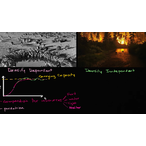
Learn the difference between density-dependent and density-independent factors that affect population growth, and explore examples of each.…
VideoFree11 minutes
check_box_outline_blank
Chemistry: Paramagnetism and diamagnetism
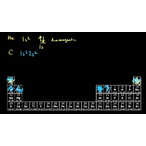
Chemistry Did you know that everything is made out of chemicals? Chemistry is the study of matter: its composition, properties, and reactiv…
VideoFree8 minutes
check_box_outline_blank
Biology: 2015 AP Biology free response 8
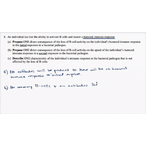
Humoral and cell-mediated immune responses. Biology Life is beautiful! From atoms to cells, from genes to proteins, from populations to eco…
VideoFree5 minutes
check_box_outline_blank
Cosmology and astronomy: Intergalactic scale

Intergalactic Scale Cosmology and astronomy It's a great, big universe out there. In this section of Khan Academy, you'll learn about the b…
VideoFree11 minutes
check_box_outline_blank
Biology: Exponential and logistic growth in populations
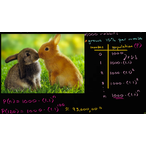
Learn about population growth rates and how they can be modeled by exponential and logistic equations. Biology Life is beautiful! From atom…
VideoFree8 minutes
check_box_outline_blank
Biology: The carbon cycle
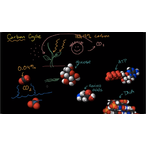
Overview of how carbon is recycled through our biosphere in the carbon cycle. Biology Life is beautiful! From atoms to cells, from genes to…
VideoFree9 minutes
check_box_outline_blank
Cosmology and astronomy: A universe smaller than the observable

A Universe Smaller than the Observable Cosmology and astronomy It's a great, big universe out there. In this section of Khan Academy, you'l…
VideoFree9 minutes
check_box_outline_blank
Biology: Eutrophication and dead zones
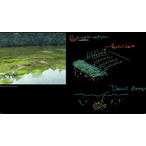
How eutrophication, caused by extra nutrients in runoff, can lead to dead zones. Biology Life is beautiful! From atoms to cells, from genes…
VideoFree7 minutes
check_box_outline_blank
Organic chemistry: Conformational analysis of propane
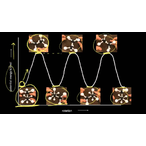
How to analyze the staggered and eclipsed conformations of propane Organic chemistry Sal and Jay cover topics covered in college organic ch…
VideoFree8 minutes