Khan Academy: 2757 products
Khan Academy is an organization on a mission. We're a not-for-profit with the goal of changing education for the better by providing a free world-class education for anyone anywhere.
All of the site's resources are available to anyone. It doesn't matter if you are a student, teacher, home-schooler, principal, adult returning to the classroom after 20 years, or a friendly alien just trying to get …
check_box_outline_blank
Chemistry: Experimental determination of rate laws


Example using initial rates to find the order in each reactant, the overall order, and the rate constant k. Chemistry Did you know that eve…
VideoFree12 minutes
check_box_outline_blank
Class 11 Physics (India): Elastic and non elastic materials
Is steel more elastic than rubber? We all have some intuition for elastic and non-elastic materials. But how do we define elasticity? How d…
VideoFree12
check_box_outline_blank
Class 12 Physics (India): Simple microscope
Let's explore how a magnifying glass (simple microscope) really works. Class 12 Physics (India) It is now time to dive deeper into the worl…
VideoFree14
check_box_outline_blank
Class 11 Physics (India): Solved example: pressure needed to compress water
Let's solve a numerical on bulk modulus. Let's explore how easy or difficult it is to compress water in this problem-solving video. Class 1…
VideoFree6
check_box_outline_blank
Health and medicine: Molarity, molality, osmolarity, osmolality, and tonicity - what's the difference?

See how each of these terms tells us something different about a solution. Rishi is a pediatric infectious disease physician and works at K…
VideoFree4 minutes
check_box_outline_blank
Health and medicine: What is cyanotic heart disease

Health and medicine The medical world can be a confusing place. Patients, their families, and even students entering health fields might fe…
VideoFree7 minutes
check_box_outline_blank
Health and medicine: Neuroplasticity
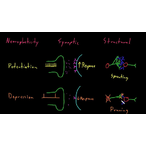
Health and medicine The medical world can be a confusing place. Patients, their families, and even students entering health fields might fe…
VideoFree10 minutes
check_box_outline_blank
Health and medicine: Types of hormones

There are three major types of hormones. 1) Protein hormones (or polypeptide hormones) are made of chains of amino acids. An example is ADH…
VideoFree10 minutes
check_box_outline_blank
Electrical engineering: Spout motor mount

Electrical engineering Learn about electricity, circuit theory, and introductory electronics. We also have sections that let you get down a…
VideoFree4 minutes
check_box_outline_blank
Class 10 Physics (India): Mirror formula
Let's explore the mirror formula (1/f = 1/v+1/u) and see how to locate images without drawing any ray diagrams Created by Mahesh Shenoy Cla…
VideoFree9
check_box_outline_blank
Class 11 Physics (India) - Hindi: Three box system problem (Hindi)
In this video Ram explains how to easily find the acceleration of a three box system by treating it as a single mass. Class 11 Physics (Ind…
VideoFree9
check_box_outline_blank
Class 11 Physics (India) - Hindi: 2 dimensional momentum problem (Hindi)
An example of conservation of momentum in two dimensions. Class 11 Physics (India) - Hindi To help students who prefer to learn by watching…
VideoFree13
check_box_outline_blank
Class 11 Physics (India): Newton, Leibniz, and Usain Bolt

Why we study differential calculus. Class 11 Physics (India) Let's learn, practice, and master topics of class 11 physics (NCERT) starting …
VideoFree9
check_box_outline_blank
Class 11 Physics (India) - Hindi: Intro to Relative Velocity (Hindi)
Velocity is relative and not absolute. It depends upon who is doing the measurement, i.e. what is the frame of reference. Class 11 Physics …
VideoFree7
check_box_outline_blank
Class 11 Physics (India): Area between a curve and the x-axis
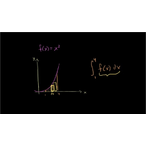
Based on the fundamental theorem of calculus, we can use antiderivatives to compute integrals. Class 11 Physics (India) Let's learn, practi…
VideoFree6