Khan Academy: 2757 products
Khan Academy is an organization on a mission. We're a not-for-profit with the goal of changing education for the better by providing a free world-class education for anyone anywhere.
All of the site's resources are available to anyone. It doesn't matter if you are a student, teacher, home-schooler, principal, adult returning to the classroom after 20 years, or a friendly alien just trying to get …
check_box_outline_blank
Class 11 Physics (India) - Hindi: Would a brick or feather fall faster? (Hindi)

What would fall faster on the moon, a brick or a feather? Class 11 Physics (India) - Hindi To help students who prefer to learn by watching…
VideoFree10
check_box_outline_blank
Physics: Question 4: 2015 AP Physics 1 free response
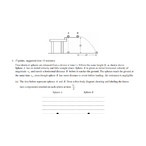
Identical spheres falling from the same height with different horizontal velocities. Physics Learn about the basic principles that govern t…
VideoFree11 minutes
check_box_outline_blank
Class 12 Physics (India): Half wave rectifiers
How do you convert AC to DC? The circuits that do that are called Rectifiers. Turns out there are different kinds of rectifiers, some simpl…
VideoFree11
check_box_outline_blank
Health and medicine: Visual field processing
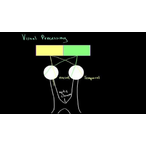
In this video, I review how we process our visual field, and how information from the right and left visual field is broken down and sent t…
VideoFree4 minutes
check_box_outline_blank
Electrical engineering: Chassis/frame
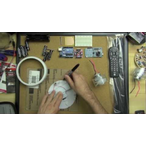
In this video we show you how to craft the chassis for the Bit-zee using a \$3 piece of Lexan and tap light housing Electrical engineering …
VideoFree7 minutes
check_box_outline_blank
Physics: AP Physics 1 review of Energy and Work
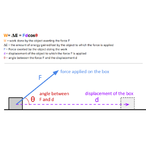
In this video David explains the concepts in Work and Energy and does an example problem for each concept. Link for document: https://www.d…
VideoFree12 minutes
check_box_outline_blank
Organic chemistry: Amides, anhydrides, esters, and acyl chlorides

Carboxylic acid derivatives - amides, anhydrides, esters and acyl chlorides. Organic chemistry Sal and Jay cover topics covered in college …
VideoFree9 minutes
check_box_outline_blank
Class 11 Physics (India): Deflate gate
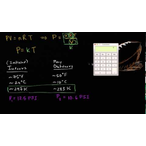
Using the ideal gas equation to calculate the change in air pressure in a football at different temperatures. Class 11 Physics (India) Let'…
VideoFree9 minutes
check_box_outline_blank
Class 11 Physics (India): Sine & cosine identities: symmetry
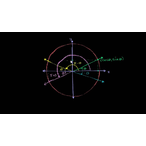
Sal finds several trigonometric identities for sine and cosine by considering horizontal and vertical symmetries of the unit circle. Class …
VideoFree8
check_box_outline_blank
Health and medicine: Bohr effect vs. Haldane effect
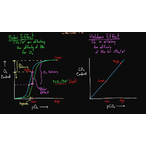
Take a close look at how some friendly competition for Hemoglobin allows the body to more efficiently move oxygen and carbon Dioxide around…
VideoFree14 minutes
check_box_outline_blank
Health and medicine: How white blood cells move around
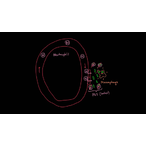
Health and medicine The medical world can be a confusing place. Patients, their families, and even students entering health fields might fe…
VideoFree9 minutes
check_box_outline_blank
Class 11 Physics (India): Indefinite integrals of sin(x), cos(x), and eˣ
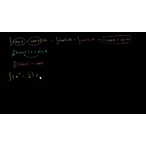
∫sin(x)dx=-cos(x)+C, ∫cos(x)dx=sin(x)+C, and ∫eˣdx=eˣ+C. Learn why this is so and see worked examples. Class 11 Physics (India) Let's learn…
VideoFree4
check_box_outline_blank
Health and medicine: Pathophysiology - Type II diabetes

Visit us (http://www.khanacademy.org/science/healthcare-and-medicine) for health and medicine content or (http://www.khanacademy.org/test-p…
VideoFree8 minutes
check_box_outline_blank
Health and medicine: Preventing TB using the "4 I's"
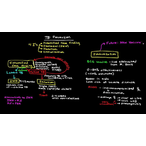
Learn how to help prevent TB disease using Intensive case finding, Isoniazid, Isolation, and Immunization. These videos do not provide medi…
VideoFree12 minutes
check_box_outline_blank
Organic chemistry: Structural (constitutional) isomers
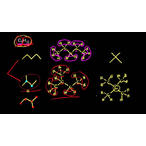
How to draw structural isomers using bond-line structures Organic chemistry Sal and Jay cover topics covered in college organic chemistry c…
VideoFree10 minutes