Khan Academy: 2757 products
Khan Academy is an organization on a mission. We're a not-for-profit with the goal of changing education for the better by providing a free world-class education for anyone anywhere.
All of the site's resources are available to anyone. It doesn't matter if you are a student, teacher, home-schooler, principal, adult returning to the classroom after 20 years, or a friendly alien just trying to get …
check_box_outline_blank
Class 11 Physics (India): Limits from tables

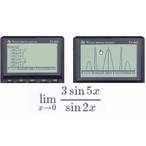
Sal finds the limit of 3sin(5x)/sin(2x) at x=0 using a table of values. Class 11 Physics (India) Let's learn, practice, and master topics o…
VideoFree3
check_box_outline_blank
Health and medicine: Leukemia treatment
There are three main solutions to treat leukemia. Chemotherapy is a collection of drugs which target cells that rapidly multiply (a key cha…
VideoFree6 minutes
check_box_outline_blank
Organic chemistry: Enolate formation from aldehydes
How to form enolates from aldehydes using sodium ethoxide and sodium hydride. Organic chemistry Sal and Jay cover topics covered in college…
VideoFree6 minutes
check_box_outline_blank
Class 11 Physics (India) - Hindi: Centripetal force problem solving (Hindi)
In this video, Ram gives some problem-solving strategies for centripetal force problems and explains many common misconceptions people have…
VideoFree17
check_box_outline_blank
Class 12 Physics (India): Electric potential energy (part 2-- involves calculus)

Electric potential energy difference in a varying field Class 12 Physics (India) It is now time to dive deeper into the world of physics wi…
VideoFree10 minutes
check_box_outline_blank
Physics: AP Physics 1 Review of Charge and Circuits
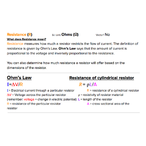
In this video David quickly explains each charge and circuit concept and does a sample question for each one. Physics Learn about the basic…
VideoFree19 minutes
check_box_outline_blank
Class 11 Physics (India): Thermodynamics part 3: Kelvin scale and Ideal gas law example

Sal makes the case for the Kelvin scale of temperature and absolute zero by showing that temperature is proportional to kinetic energy. The…
VideoFree10 minutes
check_box_outline_blank
Health and medicine: What is emphysema?
Emphysema is a chronic medical condition (most often caused by smoking and air pollution) where lung tissue is damaged and traps air inside…
VideoFree11 minutes
check_box_outline_blank
Class 11 Physics (India): Worked example: Newton's law of cooling
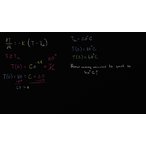
The general function for Newton's law of cooling is T=Ce⁻ᵏᵗ+Tₐ. In this video, we solve a word problem that involves the cooling of a fresh…
VideoFree12
check_box_outline_blank
Class 10 Physics (India): Why do stars twinkle (but planets don't)?
Let's explore what causes the twinkling effect of stars. We will also explore why planets, sun and moon don't seem to twinkle. Created by M…
VideoFree8
check_box_outline_blank
Organic chemistry: Proton NMR practice 3

More practice determining the structure of a molecule from the molecular formula, hydrogen deficiency index, and proton NMR spectrum. Uses …
VideoFree7 minutes
check_box_outline_blank
Class 11 Physics (India): Derivative as slope of curve

Sal solves a couple of problems where he interprets the derivative of a function at a point as the slope of the curve, or of the line tange…
VideoFree6
check_box_outline_blank
Class 11 Physics (India) - Hindi: Introduction to Momentum (Hindi)
What is momentum? A simple problem involving momentum. Class 11 Physics (India) - Hindi To help students who prefer to learn by watching Hi…
VideoFree10
check_box_outline_blank
Health and medicine: Preventing an HIV infection

Visit us (http://www.khanacademy.org/science/healthcare-and-medicine) for health and medicine content or (http://www.khanacademy.org/test-p…
VideoFree9 minutes
check_box_outline_blank
Organic chemistry: Nucleophilicity vs. basicity

Nucleophilicity vs. Basicity . The difference between what it means to be a nucleophile and a base Organic chemistry Sal and Jay cover topi…
VideoFree13 minutes