Health and medicine: Emotions: limbic system


Description
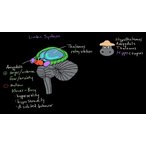
The limbic system is a set of structures in the brain that deal with emotions and memory. It regulates autonomic or endocrine function in response to emotional stimuli and also is involved in reinforcing behavior . The limbic system is composed of four main parts: the hypothalamus, the amygdala, the thalamus, and the hippocampus. There are several other structures that may be involved in the limbic system as well, but scientists have not reached a unanimous consensus on them.
Health and medicine
The medical world can be a confusing place. Patients, their families, and even students entering health fields might feel overwhelmed by the large vocabularies and complicated explanations. We hope …
Frequently asked questions
There are no frequently asked questions yet. If you have any more questions or need help, contact our customer service.
The limbic system is a set of structures in the brain that deal with emotions and memory. It regulates autonomic or endocrine function in response to emotional stimuli and also is involved in reinforcing behavior . The limbic system is composed of four main parts: the hypothalamus, the amygdala, the thalamus, and the hippocampus. There are several other structures that may be involved in the limbic system as well, but scientists have not reached a unanimous consensus on them.
Health and medicine
The medical world can be a confusing place. Patients, their families, and even students entering health fields might feel overwhelmed by the large vocabularies and complicated explanations. We hope to make understanding the medical world a bit easier. Look around! These videos do not provide medical advice and are for informational purposes only. The videos are not intended to be a substitute for professional medical advice, diagnosis or treatment. Always seek the advice of a qualified health provider with any questions you may have regarding a medical condition. Never disregard professional medical advice or delay seeking it because of something you have read or seen in any Khan Academy video.
Emotion
Learn about the physiological, behavioral, and cognitive components of emotion. Appreciate how different areas of our brain play a role in emotion. Understand the basic theories of emotion.
Topic: Science
Learn about all the sciences, from physics, chemistry and biology, to cosmology and astronomy, across hundreds of videos, articles and practice questions.
Share your review
Do you have experience with this video? Submit your review and help other people make the right choice. As a thank you for your effort we will donate $1.- to Stichting Edukans.There are no frequently asked questions yet. If you have any more questions or need help, contact our customer service.